
24/7 Emergency Line Open
Water Softener and Filtration in Centennial: Test First, Then Choose
Hard water leaves white scale on fixtures, spots on glass and a film in the shower, and it shortens the life of heaters. Before buying anything, find out how hard your water is, since Denver Water rates its supply soft to moderately hard and a different district may serve your street. A plumber can test the water, then install or repair a softener, a filter or a drinking-water system that fits what you found.
- Licensed and insured plumbers
- Same-day service when available
- 24/7 emergency dispatch
Hard water signs and testing: confirm what you have first
Denver Water rates its sources soft to moderately hard, with the South Platte supply around 3 to 7 grains per gallon and the Moffat snowmelt supply around 2 to 4. Its own materials say the scale from that water is cosmetic. Your supplier may be a different district, so the first job is to learn who serves your address and test the water at your tap.
One grain per gallon is about 17 milligrams per liter, which helps when a test shows one unit and a report uses the other. Test at a tap before any treatment, and again after, so you can see what changed.
| What you notice | What it suggests | Next step |
|---|---|---|
| White spots on glass and fixtures | Minerals drying on the surface | Test the water to put a number on it |
| Scale in the kettle or on the showerhead | Heat concentrates minerals | Descale, then decide if treatment is worth it |
| Water heater sediment and noise | Scale building on the tank bottom | Flush the heater; see the repair page |
| Soap that will not lather | Hardness binds with soap | Check the reading before buying a softener |
| Brown or metallic taste | Not hardness: possibly iron or pipes | A softener will not fix this; test for it |
A softener adds sodium to the water it treats, so ask your doctor if anyone in the house is on a low-sodium diet. Keep a separate cold tap for drinking if needed, and never pour drain cleaner or chemicals into the brine tank.
Water softener installation: where it goes and what it needs
A softener connects to the main water line after the shutoff and before the water heater, with a drain for the regeneration water and an outlet for power. A bypass valve lets the water flow around it for service. A plumber also checks the water pressure and the drain route before choosing the unit.
Salt-based softeners swap calcium and magnesium for sodium during regeneration, and they flush the minerals to the drain. Sizing follows household use and the hardness reading, so a test comes before the quote. A tank that is too large wastes salt, and one that is too small regenerates too often.
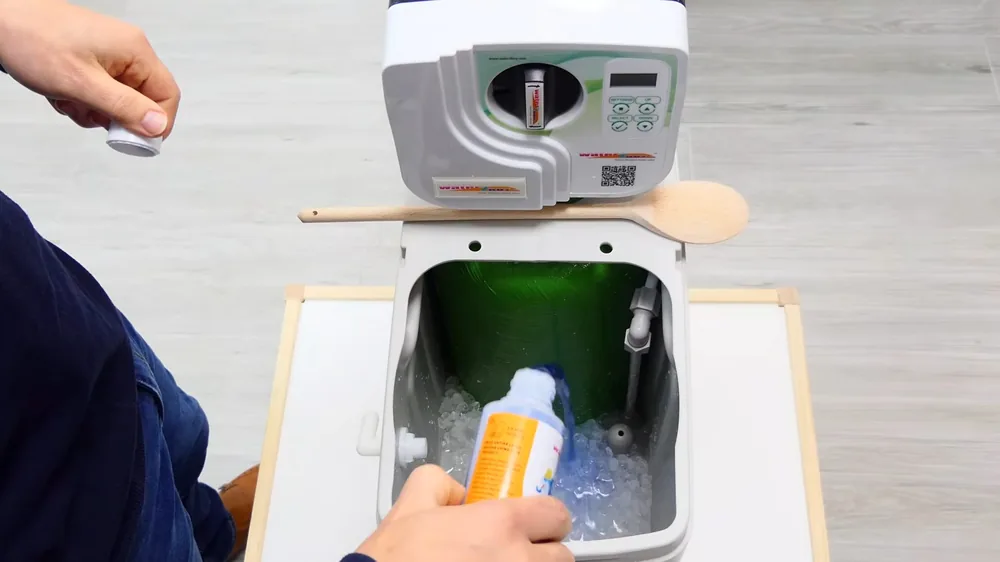
Softener not working or leaking salt water? Call a plumber
Say what the unit is doing and when it last regenerated. A plumber serving your area is sent where one is available.
Softener repair and service: salt, brine and regeneration
Most softener calls are about salt. A salt bridge, a mushy salt layer, a dirty brine tank or a blocked injector stops regeneration, and the water goes hard again with no warning. Other calls involve a control valve that will not cycle, a drain that runs without stopping or a leak around the tank.
Salt and brine are part of the regular routine: keep the salt level above the water line, use the grade the maker specifies, and clean the tank now and then. The model and age of the unit decide whether a repair is worth doing, and a plumber can say honestly when it is not.
- Check the salt level and look for a hard crust over the salt.
- Run a manual regeneration and listen for the valve to cycle.
- Watch the drain line for flow during the cycle.
- Test the water after regeneration to see if the hardness has dropped.
Whole-house filtration and water conditioning
A whole-house filter treats all the water at the point where it enters the house. Sediment filters catch grit, carbon filters reduce chlorine taste and odor, and specialty media target specific contaminants. A filter that does one job well is a better buy than one that promises everything.
Water conditioning is a broader term that covers softeners and some systems that change how scale forms rather than removing the minerals. Ask what a device removes, how it is tested and how often the media has to change, since a filter left in place too long stops working.
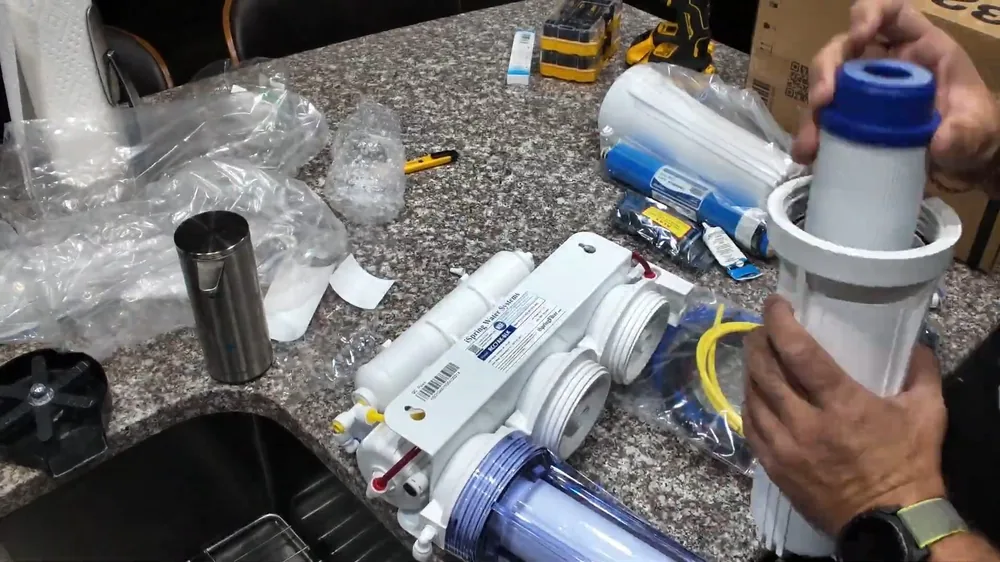
Want a drinking-water filter or reverse osmosis? Call and describe it
Tell the dispatcher what you want removed or improved, and the dispatcher explains the next step.
Reverse osmosis and under-sink drinking water filters
A drinking-water system treats the water at one tap, usually the kitchen. Reverse osmosis pushes water through a fine membrane and produces a small stream of very clean water, with a drain line for the rejected water. A plain under-sink filter is simpler and has no drain.
The city's own utilities page warns that lead can enter from fixtures and service lines the customer owns. If lead is the question, a filter has to be certified for lead reduction, and a plumber can also check what material the service line and the fixtures are made of.
Scale, heaters and what treatment can and cannot do
Hard water shortens the life of a water heater and clogs a tankless heat exchanger. The water heater repair page and the tankless water heater page explain the effects, and a flush each year slows the damage.
A softener helps with scale but does nothing for taste, lead or bacteria, and it is not a drinking-water filter. If the reading is moderate, regular descaling may do the job at a fraction of the effort. The honest question is whether the water you have causes a problem you can see.
Water softener and filtration questions, answered
How do I know if I have hard water?
Look for white crusty deposits on faucets and showerheads, spots on dishes, a film on the shower door and soap that does not lather well. A hardness test strip gives a rough number, and a plumber can test it properly. The reading matters more than the symptoms, because a moderately hard supply may not need a softener at all.
My softener has a salt bridge or something fell into the brine tank. What now?
A salt bridge is a hard crust that forms over empty space, so the salt looks full but the unit is not making brine. Breaking it with a broom handle usually fixes it. An object dropped into the brine well, such as a tool, can block the unit and needs a careful retrieval. A plumber can clear either problem and check that the unit regenerates.
Can a water softener valve be replaced without replacing the unit?
Often yes. The control valve is a replaceable part on many models, and a worn or failed valve is a common reason for no regeneration or a constantly running drain. The plumber needs the model number to match a valve, and the tank, resin and brine system should be checked while the valve is out.
What does a water conditioner repair involve?
The plumber finds out whether the unit regenerates, whether the valve, the injector and the brine line are clear, and whether the resin is still working. A resin bed that has worn out can be replaced. Many units are repairable, and some are old enough that replacement makes more sense.
Water softener or filter trouble in Centennial? Call the dispatch line
The line is answered 24/7. Describe the unit and the problem, and the dispatcher checks what a plumber serving your area can do.
- Licensed and insured plumbers
- Same-day service when available
- 24/7 emergency dispatch