
24/7 Emergency Line Open
Emergency Leak Detection for Hidden Water Leaks in Centennial
Centennial homes are served by several water districts, and each bill carries a meter that records every gallon that passes it. A meter that keeps turning when every tap is closed is the plainest sign of a hidden leak, and it is the right moment to call. This page covers how a plumber serving your area finds the leak, what repair looks like once it is found, and what to do while you wait.
- Licensed and insured plumbers
- Same-day service when available
- 24/7 emergency dispatch
How leak detection finds a leak before it opens a wall
Leak detection starts by deciding whether the water is on the supply side, the drain side or outside the house, because each calls for different equipment. The process starts the same way each time. A plumber shuts the house off from the district, watches the meter and the pressure gauge, and then narrows the search with listening gear and heat or gas tracing.
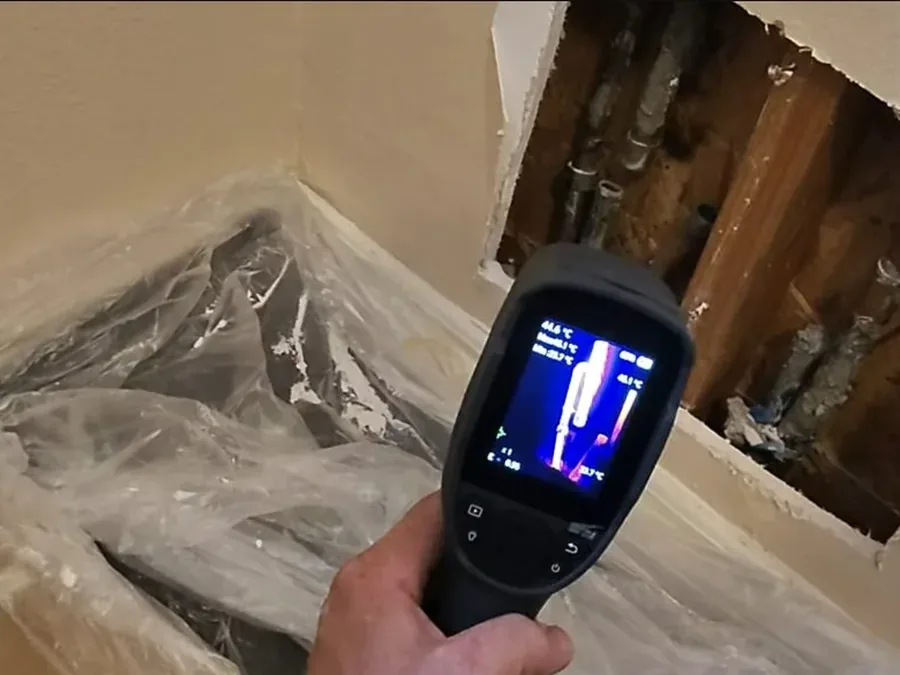
Residential leak detection runs from a whole-house meter test down to precise leak location at one joint, and common leak locations are supply joints, shutoff valves, water heater connections, fixture seals and washing machine hoses. Electronic listening, which some tools call sonar-style acoustic detection, picks up the sound of water escaping under pressure and can follow it along a wall or floor. Infrared leak detection, also called thermal imaging leak detection, reads small temperature differences that wet material leaves behind. Where a line is buried or inside a closed cavity, a tracer such as helium injected into the isolated pipe escapes at the leak and a sensor finds it. Advanced leak detection technology matters most when it saves you from cutting several openings to find one pipe.
| Method | Finds | Limit to know about |
|---|---|---|
| Meter and pressure test | Whether a leak exists at all, and which side of the house it is on | Does not say where in the house |
| Electronic listening | Pressurized supply leaks in walls, floors and buried lines | Hard to use where traffic or machinery is loud |
| Infrared imaging | Warm or cool patches from wet insulation, drywall or hot water lines | Shows a pattern, not a certain pipe |
| Helium tracer | Small leaks in isolated lines that the other methods cannot place | Needs the line drained and sealed off first |
| Camera inspection | Cracks and breaks inside drain lines | Only for drains, not pressurized supply |
Leak repair once the leak is located
Finding the leak is half the visit. Leak repair follows the same order on almost every call: confirm the shutoff holds, open the smallest access that reaches the pipe, cut out the damaged length or replace the failed fitting, and pressure test before anything is closed back up. Catching small leaks early keeps the opening small and the drywall repair short.
The choice that matters is patch or replace. A single failed joint is a patch. A line with several weeping points is telling you its age, and the honest conversation is about replacing that run of pipe in one visit instead of returning for each new spot. A plumber should show you the removed section and give you leak location documentation, such as a photo of the pipe and a note of where it sat, so the decision rests on what you can see. Tell the plumber the leak history of the house too: earlier repairs, patched sections and past stains all change the plan.
Meter still moving with every tap off? Call now
Describe what the meter and the walls are doing. A plumber serving your area is sent where one is available.
Signs of a hidden leak you can check yourself
Warning signs of hidden leaks often arrive long before water appears, and major water leaks are only the loud end of it. Humidity hides leaks because a damp wall can dry on the surface while the cavity stays wet, so look for slower clues: a musty smell, paint that bubbles, a floor that feels warm underfoot, or water running sounds when no one is using water.
- Close every tap and stop the dishwasher, washer and ice maker.
- Read the water meter and note the dial or digits.
- Wait 30 minutes without using any water, then read it again.
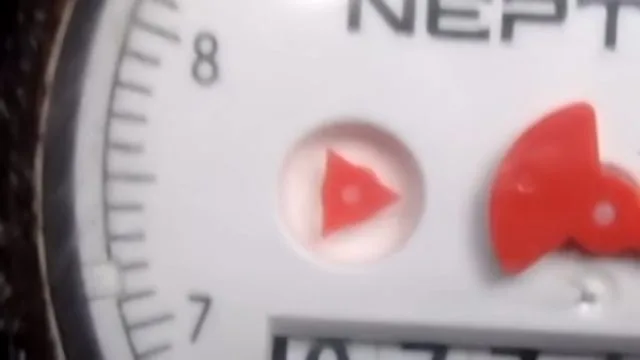
- Check the leak indicator on the meter, if it has one, since a spinning triangle or dial shows flow.
- Call with the two readings and any stains or sounds you noticed.
Do not open a ceiling that is sagging or holding water. Let a plumber relieve it, and keep power off to any fixture or outlet in the wet area.
The same test sorts out high water bill complaints. If the meter does not move during the quiet half hour, the extra usage is on the use side, not a hidden pipe, and the next place to look is landscaping or a toilet that refills on its own.
Silent toilet leaks, faucets and appliance leaks
Fixture leaks are the easiest leaks to ignore and a common reason for a high bill. A toilet that leaks silently into the bowl can waste water all day. A few drops of food coloring in the tank, left for fifteen minutes without flushing, will show color in the bowl if the flapper is not sealing. Appliance leaks tend to hide behind washers, under dishwashers and at the water heater.
Dripping faucets, weeping shower valves and failed supply lines are simple repairs once identified. They are covered on the faucet, toilet and fixture repair page, and a plumber doing a leak visit will usually check them in the same trip.
Inspecting for leaks before they become damage
A plumbing inspection is a pipe condition check, not a sales call. The plumber looks at visible supply lines, shutoff valves, water heater connections, drain traps and the areas below fixtures, listens for running water, and records pressure at a hose bib. The aim is to inspect toilets for silent leaks and to note pipe that is corroded, stained green at the joints or repaired more than once.
The result is a list: what is fine, what is aging and what needs attention soon. Hydrostatic and pressure testing, where a section is held under pressure and watched for a drop, is used to prove a repair or to clear a suspect line. Smart leak detection sensors placed under sinks and near the water heater can send an alert before a drip becomes a problem. Ignoring small leaks is how a minor repair turns into structural damage from prolonged leaks, such as rotted framing, wet subfloor and mold, and damage caused by ignoring leaks is also what moves a job over to water removal and drying.
Not sure where the water is coming from? Describe it to a dispatcher
A plumber serving your area can sort a stain, a sound or a bill into the right test and tell you what to expect.
Wall, ceiling, basement and underground leaks
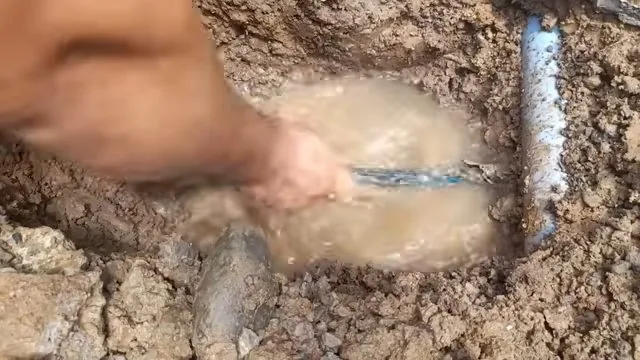
A stain on a ceiling is often the end of the story, not the start. Attic plumbing above a ceiling is a common source, and wall and ceiling leaks move along framing before they show, so the wet spot may sit several feet from the pipe. Basement leaks need a different first question: is the water arriving from a plumbing line, from groundwater, or from a fixture upstairs? Leak detection for underground lines focuses on the yard line between the meter and the house, which is covered in more detail on the water line repair and replacement page.
If you are not sure whether your house sits on a slab, over a crawlspace or above a basement, confirm that first. A leak under a slab is a different job, described on the slab leak detection page. Irrigation and sprinkler systems are a separate trade and are not handled here.
After hours, an emergency water leak repair call follows the same steps as any other, and the homepage explains how the 24/7 dispatch line works.
Who owns the leak: water district, meter and your side of the line
Water reaches Centennial addresses by more than one route. The city says Denver Water distributors carry much of it, while Southgate, ACWWA, East Cherry Creek Valley and Castlewood districts serve other streets, so the name on your bill tells you who owns the main outside. The city adds that customer-owned fixtures and service lines can be a source of lead, which makes older owner-side lines worth testing and replacing on a plan, not in an emergency.
When a leak appears near the street, the meter is the boundary that matters. A problem on the district side of it belongs to the district, and a leak after it is yours. If the repair needs digging, Colorado 811 wants two full business days of notice first, so book the excavation early.
Denver Water and city details
Numbers worth keeping handy: Denver Water customer care at 303-893-2444, and the Southgate districts line for water breaks at 303-779-0261.
Sources: City of Centennial utilities page; Southgate Districts FAQ; Colorado 811. Accessed 9 November 2026.
Leak questions Centennial homeowners ask
Do I need a plumber for a water leak, or can I handle it myself?
A visible drip at a fixture, such as a loose supply nut under a sink, is a reasonable first fix if you can close the stop valve and the part is simple. Call a plumber when the water source is unknown, when it is inside a wall, ceiling or floor, when the meter moves with everything off, or when the leak keeps returning after your repair. The unknown source is the dividing line: guessing costs more water than a visit does.
Is a bathroom leak worth repairing now, or can it wait?
Repair it now. Water that escapes around a tub, shower valve or toilet base keeps soaking subfloor and framing, and the damage is usually larger than the leak suggests by the time a stain appears below. If you cannot reach a plumber at once, close the fixture's stop valve or the main shutoff and keep the area dry.
What do I do about a leaking pipe that is dripping into the room below?
Close the main shutoff first. If the dripping slows or stops, the leak is on the supply side and a plumber needs to locate it; if it keeps dripping, the source may be a drain line or a fixture upstairs. Either way, put a bucket under the drip, move belongings, photograph the damage and call. Leave the stained ceiling closed unless water is pooling behind it, and ask the plumber whether it should be opened to relieve it.
What causes a hidden water leak in a house?
Common causes are corroded or worn supply pipe, a loose or failed joint, a cracked fitting after a freeze, a failed seal at a shower valve or toilet, and pressure that is higher than the plumbing was built for. To narrow it down: 1. Close every tap and appliance. 2. Read the meter, wait 30 minutes and read it again. 3. Look for damp spots, warm floor patches or the sound of running water. 4. Call with what you found. One caution: a drop in the meter that stops when the ice maker or irrigation timer finishes is usually that device, not a pipe.
Active leak in your Centennial home? Call the dispatch line
The line is answered 24/7. Say where the water is and what you have shut off, and the dispatcher confirms what a plumber serving your area can do for your address.
- Licensed and insured plumbers
- Same-day service when available
- 24/7 emergency dispatch