
24/7 Emergency Line Open
Plumbing Costs in Centennial, CO: What Changes a Quote
No two plumbing jobs price the same, so a plumber quotes after seeing the problem. This page explains what changes a quote, which local items sit outside the plumber's control and what to ask before approving work.
- Licensed and insured plumbers
- Same-day service when available
- 24/7 emergency dispatch
Why this page lists cost drivers and no prices
Plumbing work is priced after a diagnosis, because two jobs with the same symptom can need very different fixes. This site does not publish dollar figures, since no local price source checked for this page carries a date and a method, and an unsourced figure would mislead you more than it would help.
What can be stated honestly is what moves a quote up or down. The sections below list those drivers, which items are set by the local building office or utility rather than the plumber, and which questions to ask before you approve work.
How quoting works
A quote starts with the call. The dispatcher asks where the problem is, what you see and hear, how old and what type the equipment is, whether you can reach the shutoff and whether anything limits access. Those answers point to the likely service and the likely scope.
Often the scope cannot be confirmed from the phone, so a plumber looks at the problem before anything is priced. That visit is a diagnosis, and it can show that the job is smaller or larger than the call suggested. Ask on the call whether the visit carries a diagnostic or service fee, since that is a fair question and the dispatcher can answer it. The written quote follows the diagnosis, states what is included and is the document to compare with any other quote.
Want a quote for your own address?
Call the dispatch line. The plumber diagnoses first, then quotes the work in writing before anything starts.
What moves a plumbing quote up or down
- Access: a pipe behind an open basement ceiling takes less labor to reach than one inside a finished wall.
- Pipe age and material, which decide whether a repair holds or whether neighboring sections are likely to fail next.
- Parts and equipment, including whether a part is stocked or must be ordered.
- Scope: a single repair, a replacement or a full system change.
- Permits and inspections, which apply to some jobs and not others.
- Time and distance: an after-hours visit, or an address at the far end of a service area, changes how a job is scheduled.
- Cleanup and restoration, such as repairing a wall opened to reach a pipe.
Cost factors for each service
Use these lists as a map of what a plumber will ask about. The lead factor for each service comes first, and each heading links to the service page that explains the decisions in detail.
Leak detection
- The size of the property and the number of lines a plumber must suspect set the starting scope.
- The method used matters, and so does whether the leak can be reached without opening walls or ground.
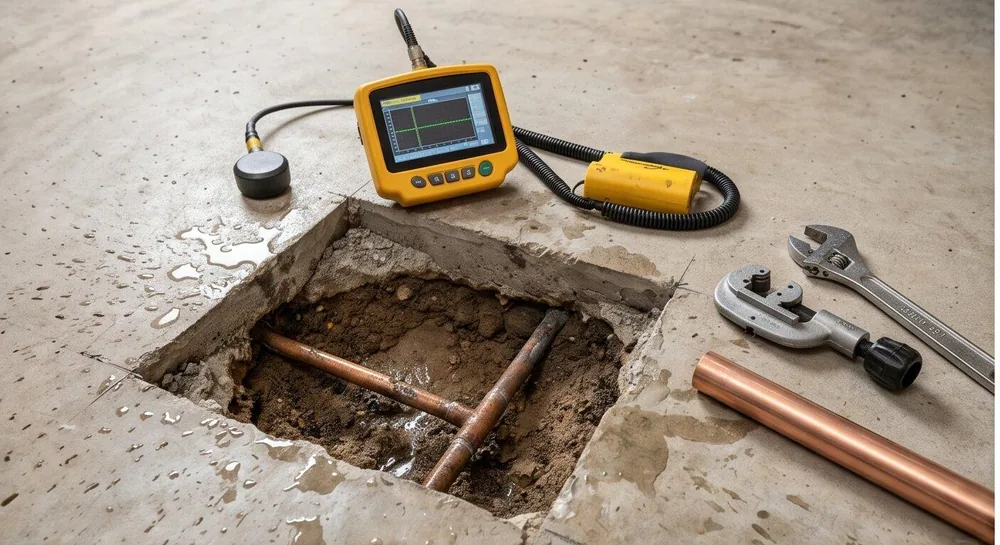
Slab leak detection
- The biggest swing is a spot breakout through the slab versus rerouting the line overhead.
- Isolation time grows with foundation size, the number of floors and the number of lines.
- Equipment, whether acoustic, thermal or tracer gas, changes how fast the leak is pinned down.
- Restoration of flooring, drywall and finishes after the repair is a separate piece of the job.
Drain cleaning
- Cleanout access and where the blockage sits, in a branch line or in the main line, shape the work most.
- A camera look may be needed to confirm the cause before cutting or jetting.
- The length of the run being cleared adds time.
- Roots call for a different cutting head than grease or scale.
Sewer line repair
- The condition of the existing pipe leads, because a cracked pipe can often be fixed by sewer lining while a collapsed one cannot.
- Length and diameter of the line set the material and labor.
- Side branches must be reconnected after a liner goes in.
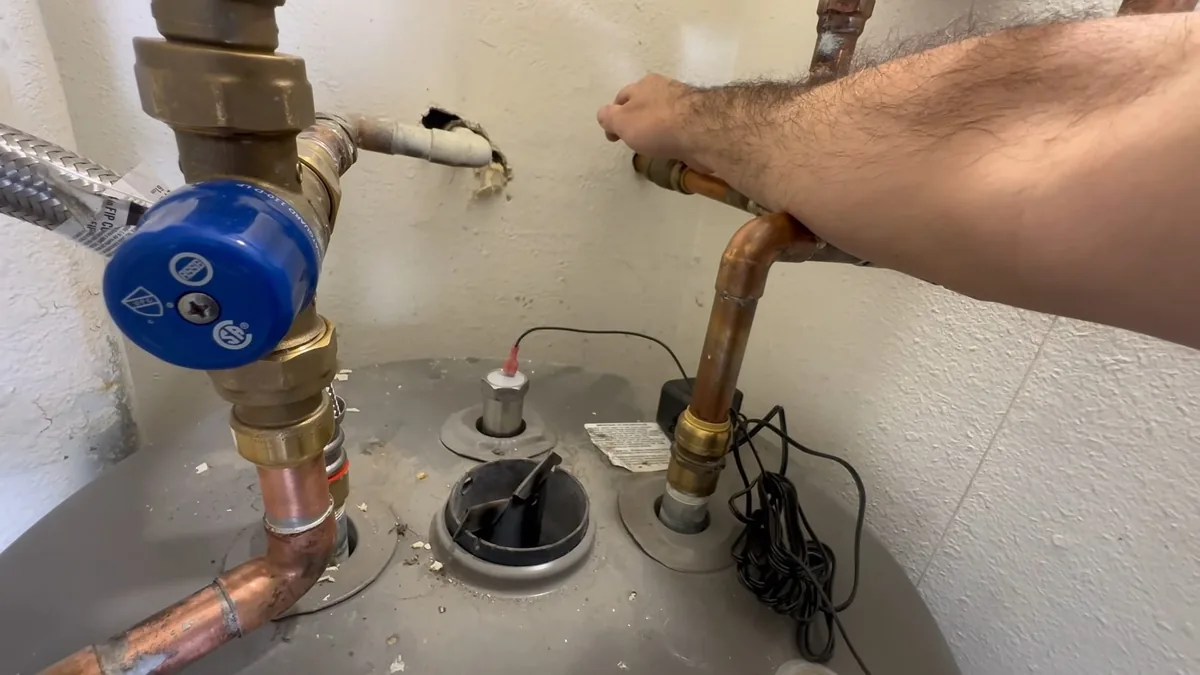
Water heater repair
- Which part has failed, and whether the plumber carries it, comes first.
- The age of the unit sets the repair-versus-replace threshold.
Water heater replacement
- Code items lead: an expansion tank, the permit and any venting corrections.
- Tank size and fuel type, whether gas, power vent or electric, set the equipment side.
Tankless water heaters
- Electrical capacity and panel space often decide whether a unit fits.
- Gas supply line size and meter capacity matter just as much on a gas model.
- The venting route and condensate drain can add work.
Repiping
- Access leads: a crawlspace, an attic or a slab each change the labor.
- House size, the number of bathrooms and the number of stories set the pipe footage.
- The pipe material chosen and the wall repair afterward finish the scope of a whole-house repipe.
Water line repair
- Ownership leads. Who owns the meter side and who owns the house side can differ by district, so ask which section you would be paying to fix, and whether a utility permit applies.
- The length and depth of the line, and the material replacing it, set the trench work.
- A trenchless method differs from an open trench, and landscape or driveway restoration is extra scope.
Gas line work
- The run length, the pipe material and the number of appliance connections lead, whether the job is a repair or a new extension.
- A pressure test and the inspection are part of the job, not an add-on.
Fixture repair
- Parts versus a whole new fixture is the main fork.
- The condition of the shutoff valve and supply line can add a second item to the visit.
Garbage disposal
- Motor size and the build of the unit lead.
- Outlet, switch and discharge changes under the sink can add work.
Water softener and filtration
- Local water hardness leads, along with the drain and electrical hookup where the unit will sit.
- The system type, a softener, a whole-house filter or reverse osmosis, and its capacity follow.
Commercial plumbing
- Scope, building size and after-hours access are the three drivers.
Water damage restoration
- The square footage affected and how long it stayed wet set the drying time.
After-hours and same-day visits
- A temporary stop-gap versus a full repair at the same visit is the first fork, since a stop-gap protects the house and a full repair may need parts.
- An after-hours visit adds scheduling differences compared with a daytime one, and the dispatcher can describe them when you call. This page lists no figures.
Have a quote you want to compare?
Describe the job to the dispatcher and ask what a plumber serving your area would check before pricing it.
Local items that affect the bill
Items set outside the plumber's control
Replacing a heater with the same type of unit falls under Centennial's one-stop permit track, and the Building Division at 303-754-3321 can confirm the permit fee for your address. Anyone digging must give Colorado 811 two working days of notice first. Southgate Water and Sanitation Districts puts the sewer service line on the owner, running from the house through the tap at the district main.
Sources: Centennial Building Review Schedule, Southgate FAQ. Accessed 9 November 2026.
These items explain why the same job can price differently in two nearby towns. A sewer repair on your side of the tap is yours to fund, while a blockage out in the main itself is for the district to clear. Water hardness varies by district too, and it shapes the softener choice more than the household size does.

Questions to ask before you approve the work
- What did you find, and can you show me the problem?
- Is this a repair or a replacement, and what happens if I do nothing for a month?
- Does the job need a permit, and who pulls it?
- Is the quote written, and does it say what is and is not included?
- What happens if you find something else once the wall is open?
Answers to those five questions let you compare two quotes on the same terms. If one quote omits cleanup, a permit or a part, it is not the same job as one that includes them.
Repair or replace: how to weigh the decision
Many quotes come down to one question: fix what is broken, or replace the whole item. A repair costs less today and leaves the age of the system unchanged. A replacement costs more today and resets the clock. The answer depends on how old the item is and how often it has already been fixed.
A water heater with one failed part and a modest age is usually worth repairing; one that leaks from the tank is not, because the tank itself has failed. Pipe works the same way. A single pinhole in otherwise sound copper is a repair, and pinholes that keep returning point to the repiping decision. Ask the plumber to state both options in writing with what each includes, so the comparison is on paper and not in memory.
After-hours and same-day visits
A call that comes in at night or on a weekend is dispatched like any other, but how the visit is scheduled can differ, and the quote may reflect that. The dispatcher can tell you what applies before a plumber is sent, so ask when you call. Same-day visits happen when a plumber has an opening, and no arrival time is promised.
Distance matters too. Areas farther from the Centennial dispatch address take longer to reach, which the service areas page shows in miles and drive time. None of this changes the diagnosis-first rule: the plumber looks, explains and quotes before work begins.
Water damage and insurance
After a leak or flood, ask your insurer what documentation it wants before drying starts. Photos taken before cleanup, a list of damaged items and the time the water was shut off all help. The water damage restoration page covers removal and drying, and the FAQs page lists what to do while you wait for a plumber.
Ready to get a quote for your plumbing job? Call
The dispatch line answers all day and night. Say what is wrong, and the dispatcher will explain how the visit and quote work.
- Licensed and insured plumbers
- Same-day service when available
- 24/7 emergency dispatch