
24/7 Emergency Line Open
Water Line Repair in Centennial: Main Line Leaks, Yard Lines and Replacement
The pipe that carries water from the street to your house is buried, out of sight and usually the owner's to maintain. When it leaks, the signs are a wet patch in the yard, a meter that spins with every tap closed, or pressure that has fallen for no reason. The repair starts with finding the leak, because digging in the wrong place costs time and a lawn.
- Licensed and insured plumbers
- Same-day service when available
- 24/7 emergency dispatch
Main water line leak: find it, isolate it, then repair
A main line leak can look like a burst or like nothing at all. Some break the surface in a day. Others seep into the soil for weeks and show up only as a higher bill or a green patch that stays green. The plumber begins by proving where the water is going.
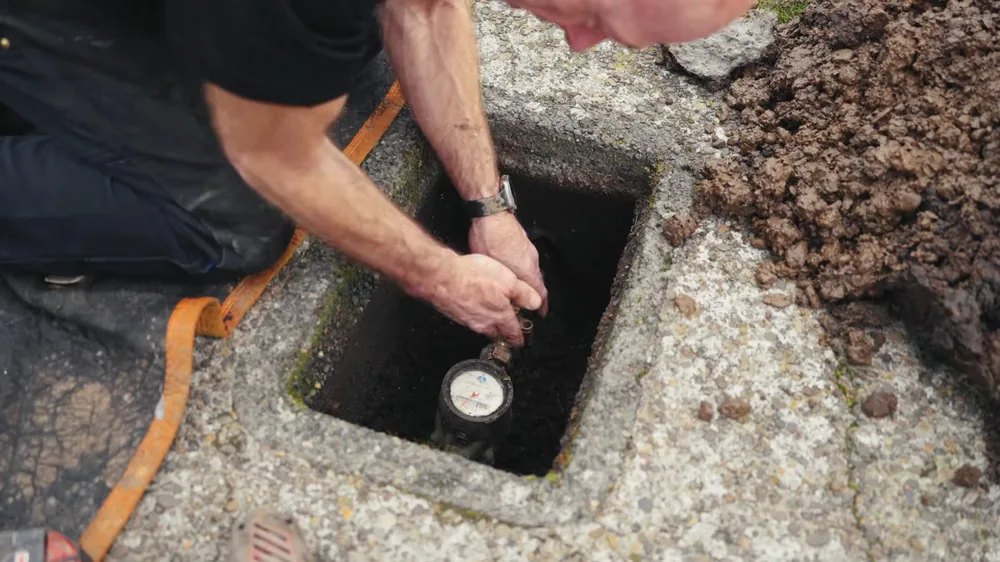
Denver Water gives a simple test: turn off all water use, read the sweep hand on the meter, and if it is still moving after a half hour or more, close the main shutoff valve. If the meter still moves with the valve closed, the leak is outside, between the meter and the valve. If it stops, the leak is inside the house.
- Close every faucet and stop any appliance that uses water.
- Watch the meter sweep hand for 30 minutes or longer.
- Close the main shutoff valve and watch the hand again.
- If it still moves, note the time and call a plumber about the line.
A buried leak can undermine a driveway or a patio. Keep vehicles and children off any sinking or soft ground over the line, and do not dig yourself until the lines have been marked.
Yard service line leaks: finding the pipe between street and house
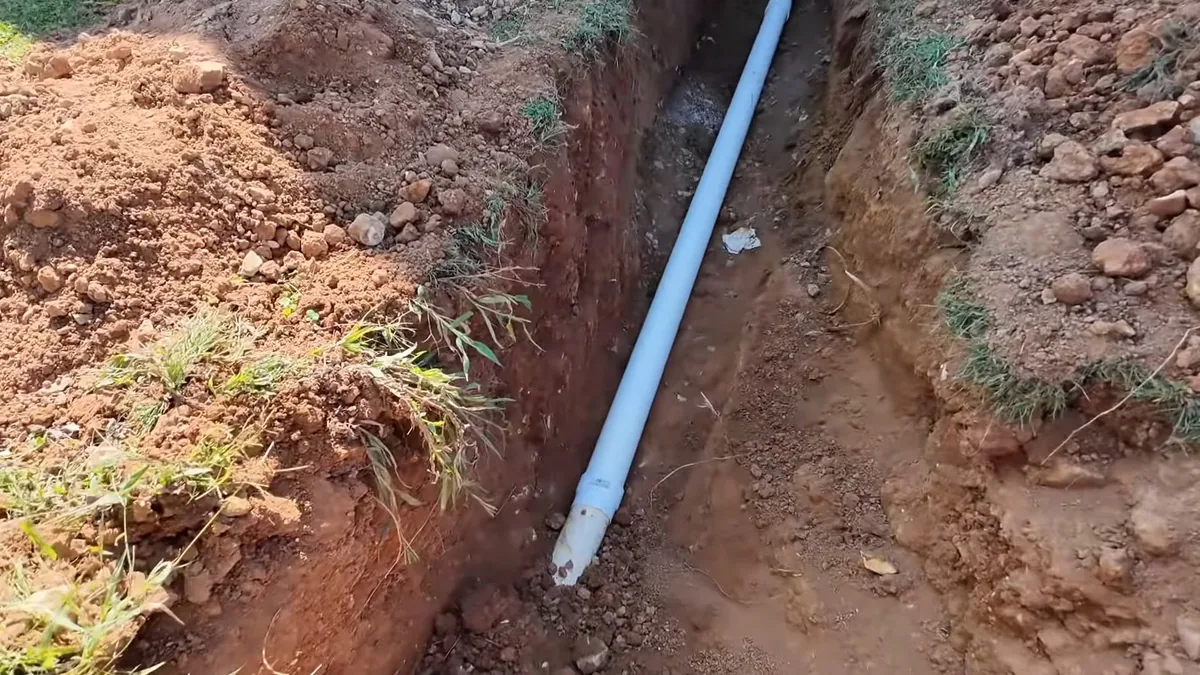
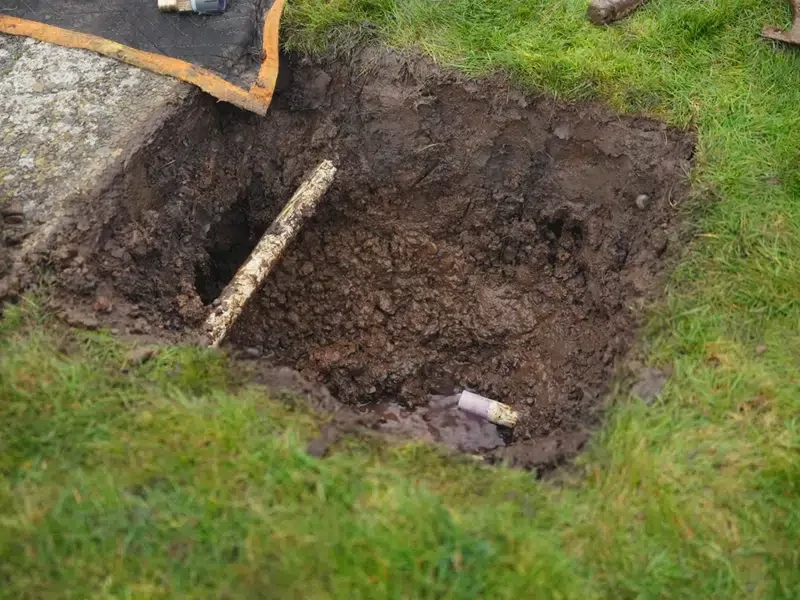
Yard service line leaks are the ones most often overlooked. It is buried to a depth that depends on the install, it may be copper, plastic or an older material, and its path is not always obvious from the surface. Locating the line and the leak comes first, using a pipe locator or acoustic gear. The page on leak detection and repair describes the methods.
Ownership matters here. Denver Water says property owners own the service line and the meter pit, and the same pattern holds in many districts, though not all. Denver Water also notes that the lead found in older customer-owned lines can be a source of lead in tap water, so a plumber should say what material the pipe is while it is open.
Wet spot in the yard or a meter that will not stop? Call now
Close the main shutoff if you can, and tell the dispatcher what you see. A plumber serving your area is sent where one is available.
Water line replacement and trenchless options
Replacing a line makes sense when it has leaked more than once, when the material is a known problem, or when a repair would require nearly as much digging as a new pipe. The choice is between an open trench and a trenchless method that pulls new pipe through the old path from two small pits.
Any digging requires a call to Colorado 811 first, and its tickets cover public lines only. Private lines, such as one running to a detached building or a yard hydrant, are not marked by 811, and the owner has to hire a private locator. A plumber should tell you who is requesting the locate before the job starts.
| Situation | Likely method | Trade-off |
|---|---|---|
| Short line, open yard | Open trench | Simple, but the yard is disturbed |
| Line under a driveway or patio | Trenchless | Less surface repair, needs a clear path |
| Line with a sharp bend or a break in its path | Open trench | Pulling pipe through a bend is not an option |
| Old line that also has leaks at joints | Replace the full run | Patching joints one by one keeps costing time |
Pressure, regulators, meters and shutoff valves
Pressure problems tie into the same buried line. A pressure regulator sits where the water enters the house and holds the pressure down to a safe level. When it fails, the house sees too much pressure, with banging pipes and dripping fixtures, or too little, with weak showers. Highlands Ranch Water states that low pressure can mean a failing regulator or a service line leak, and that a home's static pressure should stay at or below 70 psi.
A main shutoff valve should sit where the pipe enters the foundation, and Denver Water says a building without one should have one installed. Test it now by closing it and opening it again. A valve that is stuck or leaks is a repair worth doing before you need it in an emergency.
Low pressure all through the house? Describe it to a dispatcher
Say whether it is every fixture or one, and whether it started suddenly. That narrows the cause before anyone arrives.
Pressure testing and what a plumber reports after the repair
After a repair or a replacement, the line is pressurized and checked before the trench is closed. That test finds a bad joint while it is still exposed. Ask for a note of where the line runs, what pipe was used, and where the new valve and cleanout sit, so you do not have to find them again.
Pressure testing is also a diagnostic tool before work starts. If you suspect a leak but see nothing at the surface, a plumber can isolate the line and watch whether the gauge falls. A falling gauge confirms a leak on that stretch of pipe.
Water line repair questions, answered
How do I know if my water service line is leaking?
The usual signs are a soggy or sunken patch in the yard with no rain, water pooling along the line to the house, a water bill that has climbed, and pressure that has dropped. A simple test is to turn off every fixture and watch the meter. If it keeps moving, water is going somewhere. A plumber can then confirm whether the leak is in the house or in the line outside.
Who is responsible for a buried line leak, me or the water district?
Denver Water states that property owners are responsible for service lines, which run from the main into the home, while the utility repairs its own meters and mains. Other districts serve parts of Centennial and may draw the line elsewhere, so check your bill and the district's published rules. If the leak is on the street side of the meter, the utility should be called.
What does a leaking main water valve look like?
Dripping or weeping at the stem, a valve that will not fully close, or water at the packing nut. These are repair or replacement jobs, and a valve that does not shut off is a problem on its own because you cannot isolate a leak. A plumber can swap the valve or install a new one where none exists.
Why is my water pressure suddenly too high or too low?
High pressure usually points to a pressure regulator that has failed or drifted. Low pressure can mean the regulator, a partly closed valve or a leak on the service line. One district in the area advises keeping home pressure at or below 70 psi and not under 45. A plumber can fit a gauge and read the pressure at a hose bib.
Water line problem in Centennial? Call the dispatch line
The line is answered 24/7. Describe the wet area or the pressure change, and the dispatcher checks what a plumber serving your area can do.
- Licensed and insured plumbers
- Same-day service when available
- 24/7 emergency dispatch